 margin 12% · deadlines 0 at risk
Consequence before interface.
The interface answers the question the campaign raises. It never opens it.
structural engineering. A defined set of forces applied to a building to test whether it holds.
try it · run a load case
The load lands. The practice sags. One new support goes in, and it levels.
The idea as a physical model: the form architects already trust to show what a drawing can’t.01 · the problem
Loadcase is a fictional pursuit intelligence company for architecture practices. Its product lets a firm test a prospective project against its own live data (schedules, staffing, fees, pipeline and finances) before anything is signed. It shows what accepting, renegotiating, delaying, staffing up or declining would do to the rest of the practice.
Firms routinely win work without knowing what it will do to existing deadlines, specialist availability, cash flow or profit. Conventional practice-management software reveals the damage after the project begins, when the only option left is to absorb it.
That makes the product hard to advertise. Its value is a consequence that hasn’t happened yet, and an invisible consequence is difficult to make anyone feel. The product is also easy to mistake for another resource-planning dashboard, which drops the pitch into a feature comparison it was never meant to be in. The usual approach doesn’t help: interface animations, office footage and a voiceover explaining the features are what every software company in the category does, and none of it would stay with an audience of architects, who notice how things are made.
The challenge was to name a new category and make its value understandable in seconds, without opening with the software.
02 · the idea
The proposition is a single sentence:
before you say yes, see what your yes does.
Every part of the campaign follows from it. The decision comes first, the consequence becomes something you can see, and the product arrives afterward as the thing that made the seeing possible.
The name already points the way. In structural engineering, a load case is a defined set of forces applied to a building to test whether it holds. Architects know the term. The campaign takes it literally: a practice is a structure, a new project is a load, and the honest question is what happens when you put the two together.
03 · the spot
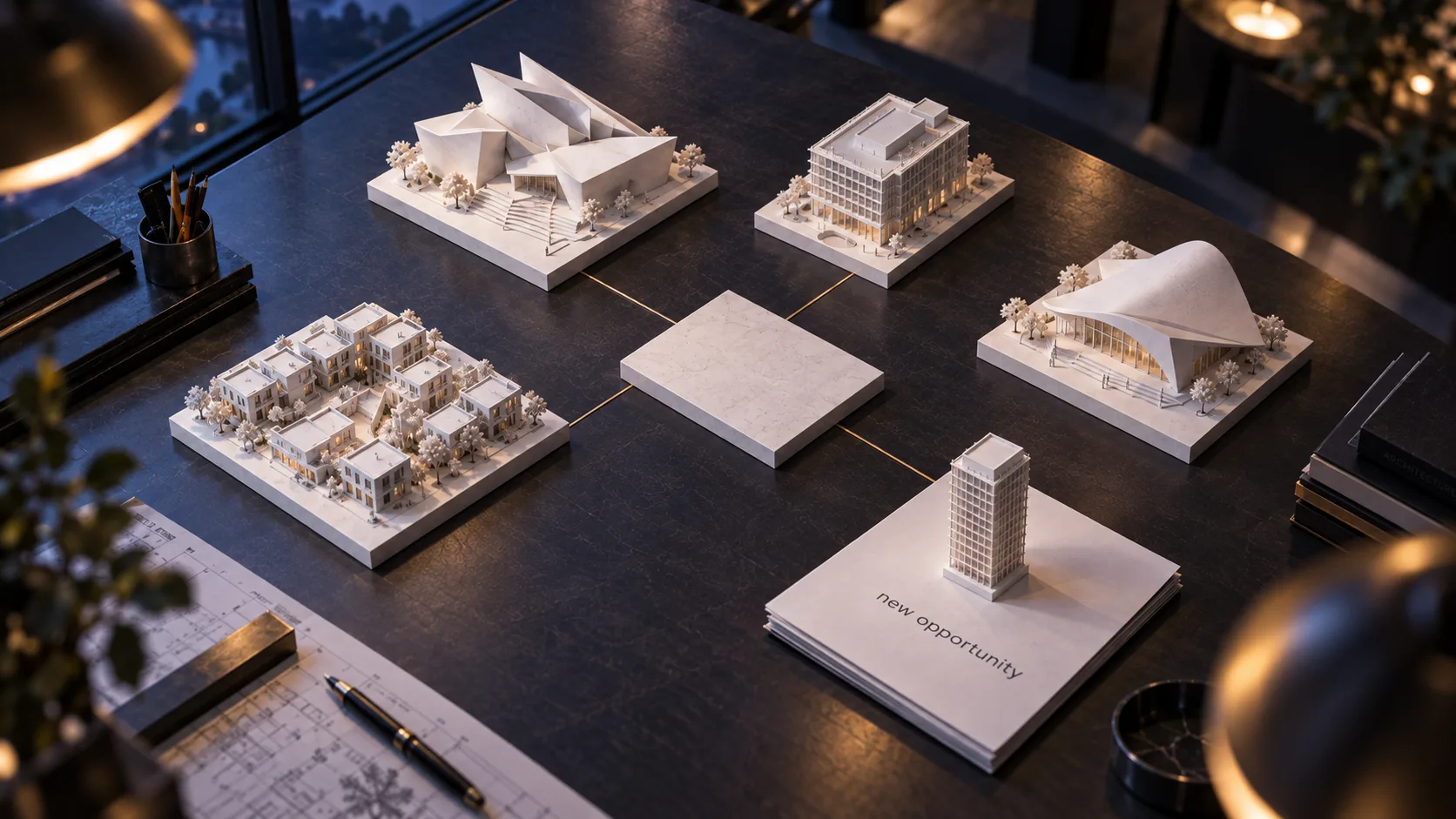
A hand places a new project into the practice. The practice responds. Then the yes that works settles into place, and only then does the name appear.
Before you say yes, see what your yes does.loadcase. pursuit intelligence for architecture practices
The practice, at the end of a good year.
A new opportunity. The obvious answer is yes.
Put it down, and watch where it lands.
Every project it touches lights up.
 01
01 02
02 03
03 04
04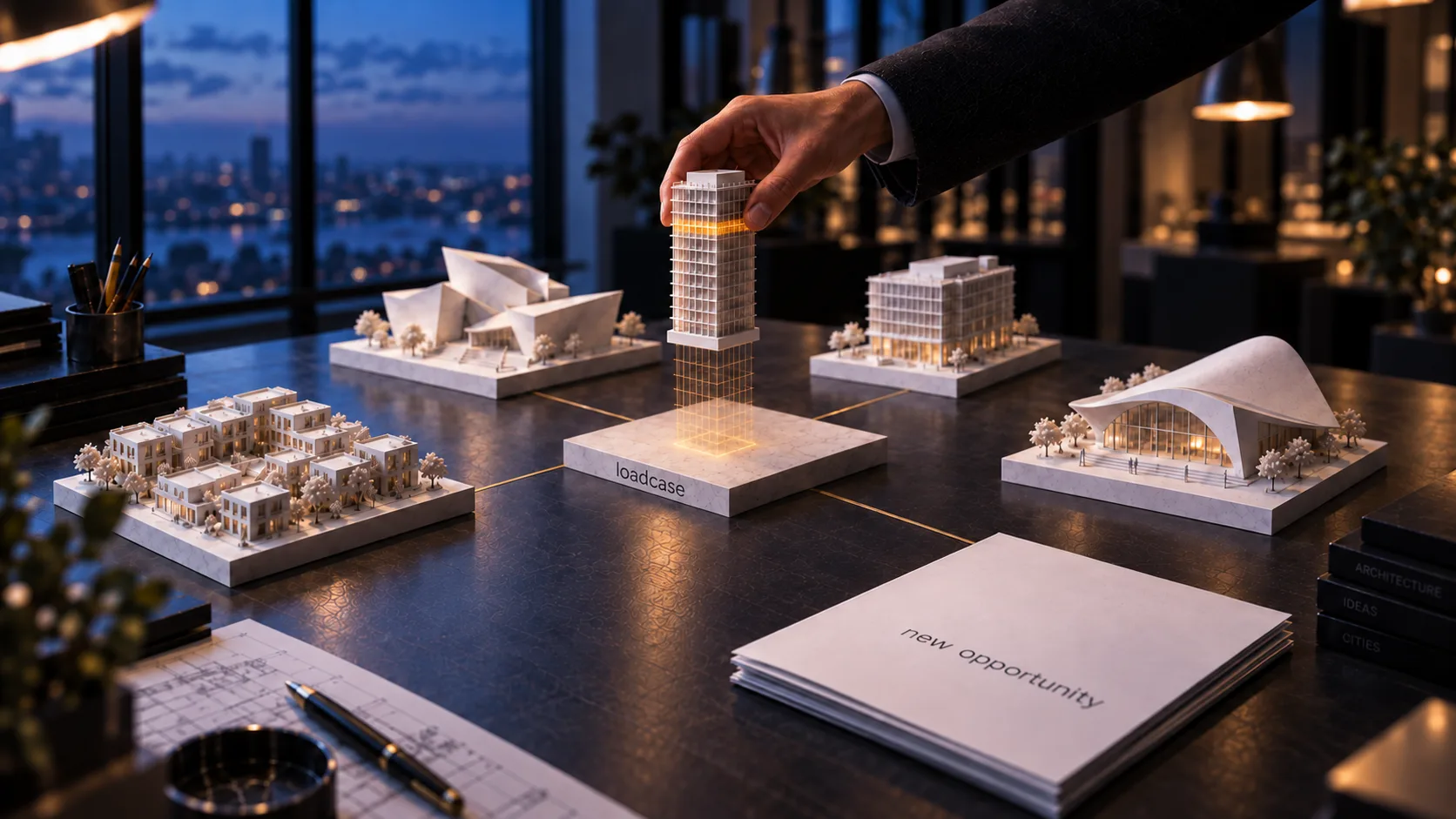 0506
0506 07
07 08
0804 · the system
margin 12% · deadlines 0 at riskThe interface answers the question the campaign raises. It never opens it.
The picture tensions up, then resolves. A firm leaves more able to say yes.
Models, structure and load. Not the generic look of business software.
Testing a project against the practice before you sign it.
resource planning · practice dashboard
It names pursuit intelligence and holds it. Never a better version of something that exists.
The product is communicated before a single screen appears. The interface answers the question the campaign raises. It never opens it. This is also what separates Loadcase from the dashboards it gets confused with: a dashboard shows you data, and this shows you what a decision does.
The obvious way to make risk feel real is to make growth look dangerous, and that would be the wrong message. Loadcase isn’t an argument against ambition. It’s what makes an ambitious yes possible. So the campaign lets the picture tension up and then resolve: the consequence is visible, and so is the version of the yes that works. A firm should come away feeling more able to say yes, not less.
The audience is managing partners and directors, people who think in models, structure and load. The visual language draws on those things directly instead of borrowing the generic look of business software. The idea is built as a physical model that reacts to the decision placed on it, which is a form architects already trust to reveal what a drawing can’t.
The work names pursuit intelligence and holds it, and never describes itself as a better version of something that exists. Establishing a category means giving the audience a new question to ask, and the campaign is built to make that question feel obvious by the end.
05 · at full scale
06 · what it shows
Loadcase is a product that’s easy to mistake for something it isn’t, whose value lives in a future the buyer can’t see. The campaign makes that future visible, in one idea, in a form its audience respects.
That is the second half of what KeepNorth does for a technical product. Terraflux is about making a signal legible. This is about making a consequence felt, and about creating the category the product belongs to. Different products, one method: find the single thing a person needs to understand, then build the moment where they understand it.
The best answer to a complicated product is a picture of what happens when you use it.